
The New Standard: Enabling Blockchain Payments for Your Business
For years, the conversation around cryptocurrency in business was dominated by one word: volatility. Business owners were rightly hesitant to accept a payment that could lose 10% of its value before it even hit their bank account.
But the landscape has shifted. In 2026, the infrastructure for digital payments has matured. By using Stablecoins and Automated Fiat Conversion, online businesses are now capturing the speed and low cost of the blockchain while maintaining the stability of the US Dollar.
Why Your Business Needs Blockchain Payments Now
Traditional payment rails (Visa, Mastercard, SWIFT) were built for a different era. They are often slow, expensive, and prone to "friendly fraud" through chargebacks. Blockchain payments solve these legacy issues at the protocol level.
- Eliminate Chargeback Fraud: Blockchain transactions are "push" payments. Unlike credit cards, where a customer can dispute a charge months later, a confirmed blockchain transaction is final and irreversible. This protects your bottom line.
- Drastically Lower Fees: Traditional international credit card processing can cost between 3% and 7%. Blockchain payment gateways often charge as little as 0.5% to 1%, directly increasing your profit margins.
- Global Reach, Instantly: You can accept a payment from a customer in Singapore as easily as one from down the street. There are no "international processing" delays; the money moves at the speed of the internet.
- 24/7/365 Settlement: Banks close on weekends and holidays. The blockchain never does. You can receive and move funds on a Sunday morning just as easily as a Tuesday afternoon.
The Secret to Avoiding Volatility: USDT and USDC
The most common question from merchants is: "How do I protect my business from Bitcoin price drops?" The answer lies in Stablecoins. Tokens like USDT (Tether) and USDC (USD Coin) are digital assets pegged 1:1 to the US Dollar.
- When a customer pays 100 USDC, you receive exactly $100 in value.
- These assets are backed by reserves (cash and US Treasuries), providing the stability of fiat with the efficiency of a digital token.
By setting your checkout to only accept stablecoins, or by using a gateway that automatically converts Bitcoin into stablecoins at the moment of purchase, you remove 100% of the price risk.
How to Integrate: The Two Main Methods
You don’t need to be a blockchain developer to start accepting these payments. Most businesses choose one of two paths:
1. The "Fiat-Settle" Gateway (Easiest)
Platforms like BitPay, Stripe, or Coinbase Commerce act as an intermediary.
- The Flow: Your customer pays in their preferred crypto (BTC, ETH, etc.).
- The Magic: The gateway locks in the exchange rate for 15 minutes.
- The Result: The gateway converts the crypto into USD/EUR and deposits it directly into your traditional bank account. You never actually "hold" crypto.
2. The "Stablecoin-Native" Workflow (Highest Profit)
If you want to bypass the traditional banking system entirely (and its associated fees), you can accept USDT or USDC directly into a business wallet.
- The Flow: Use a plugin (like NOWPayments or CoinGate) for your Shopify or WooCommerce store.
- The Result: The funds stay in your digital wallet as stablecoins. You can then use these to pay vendors globally or off-ramp them to your bank only when needed.
Essential Setup Checklist
To get started without the headache, follow these four steps:
- Choose Your Gateway: If you use Shopify, look for native integrations like Stripe or Crypto.com Pay. For custom sites, use an API-based provider.
- Enable "Auto-Convert": In your settings, toggle the option to automatically convert all incoming volatile assets (like Bitcoin) into a stablecoin (USDC) or your local fiat currency.
- Update Your Terms of Service: Since blockchain transactions are irreversible, make sure your refund policy is clear. Most merchants issue refunds in the fiat value of the original purchase.
- Compliance (KYB): Most reputable gateways will require "Know Your Business" (KYB) documentation. Have your business registration and tax ID ready for a smooth onboarding.
The Top 3 Crypto Payment Gateways for Business
To help you choose the right partner for your online business, here is a breakdown of the top three crypto payment gateways. These providers are specifically chosen for their ability to handle stablecoins (USDT/USDC) and their robust "auto-convert to fiat" features, which protect you from market volatility.
The Top 3 Crypto Payment Gateways for Business
| Feature | BitPay | Coinbase Commerce | NOWPayments |
| Best For | Established enterprises and high-volume retail. | Seamless integration for Shopify/Managed stores. | Low-fee, flexible, and privacy-focused startups. |
| Fees | 1% - 2% per transaction. | 1% flat fee. | 0.5% - 1% (sliding scale). |
| Stablecoin Support | Excellent (USDC, USDT, BUSD, GUSD). | Strong (USDC, USDT, PYUSD). | Massive (50+ stablecoins supported). |
| Fiat Settlement | Direct to bank (USD, EUR, GBP, etc.). | To Coinbase account (easily off-ramped). | Direct to wallet or bank (via partner). |
| Key Advantage | Most recognized brand; extremely high security. | "No-code" setup and world-class trust. | Non-custodial (you keep your own keys). |
1. BitPay: The Industry Standard
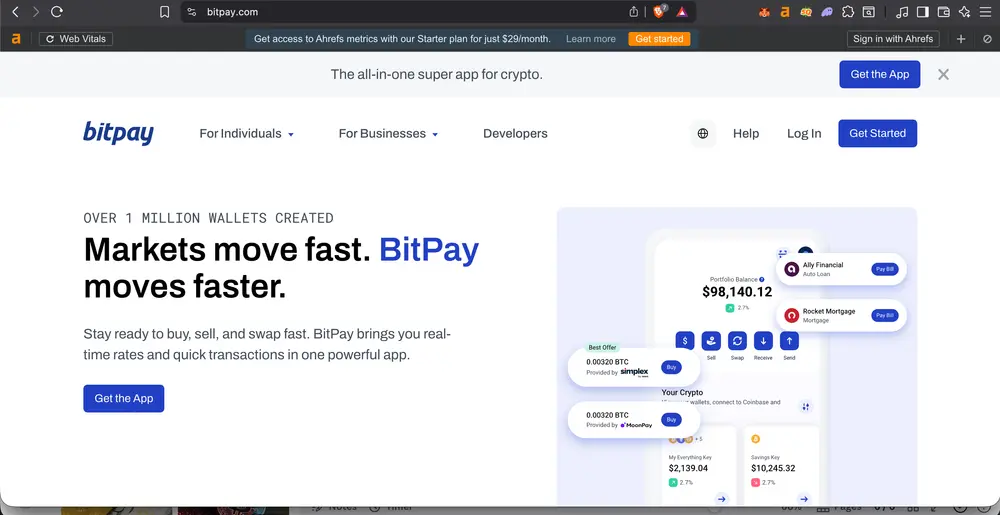
BitPay is the "grandfather" of crypto payments. They specialize in high-level security and seamless bank settlements. If your goal is to never touch crypto yourself, BitPay is the gold standard. They lock in the exchange rate for the customer for 15 minutes, ensuring that even if Bitcoin crashes during the checkout process, you get the exact dollar amount requested.
- How it handles volatility: It instantly converts crypto into your local currency (USD, EUR, etc.) and deposits it into your bank account daily.
2. Coinbase Commerce: The "No-Code" King
If you run a Shopify, WooCommerce, or Magento store, Coinbase Commerce is often the easiest to set up. It integrates as a native payment method. Because Coinbase is a publicly traded company in the US, it offers a level of regulatory comfort that few others can match.
- How it handles volatility: You can set your account to "Auto-Settle." This means any incoming Bitcoin or Ethereum is instantly swapped into USDC (a stablecoin), ensuring your balance remains stable regardless of what the crypto market does.
3. NOWPayments: The High-Margin Choice
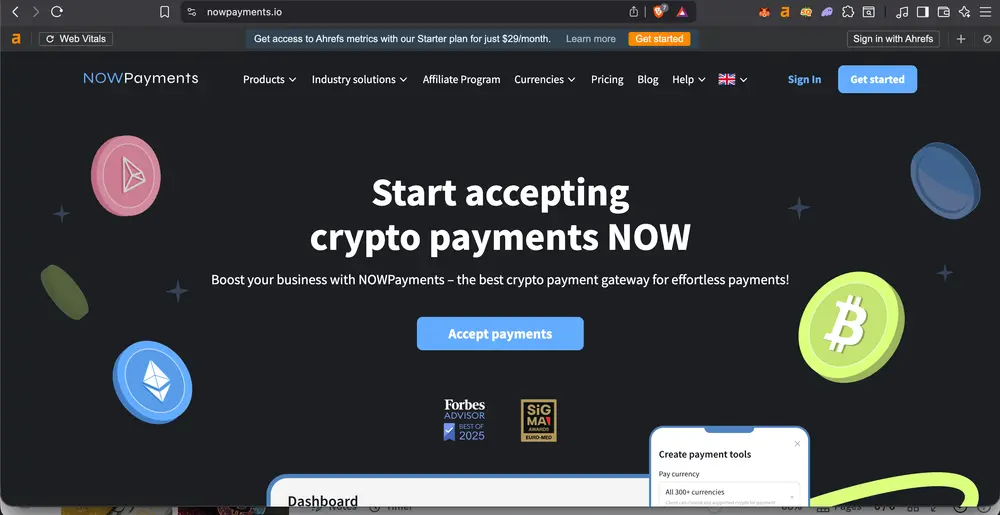
For businesses looking for the lowest possible fees, NOWPayments is a favorite. Unlike the others, they are "non-custodial," meaning the money goes directly into a wallet you control. They also support a massive variety of tokens, which is great if you have a global audience using different niche stablecoins.
- How it handles volatility: They offer a "Fixed Rate" feature. If you price a product at $50, they ensure you receive exactly $50 in USDT or USDC, regardless of the fluctuations during the transaction time.
Which one should you choose?
- If you want a traditional experience: Choose BitPay. It feels the most like a traditional credit card processor.
- If you want the easiest setup: Choose Coinbase Commerce. You can be live in under 10 minutes if you already have a store.
- If you want to save on fees: Choose NOWPayments. Their 0.5% fee is nearly unbeatable in the industry.
To ensure your customers feel confident and secure when paying with blockchain, it’s best to provide a clear, step-by-step guide on your checkout page or in your FAQ section. This reduces "cart abandonment" from users who might be new to digital assets.
Here is a template you can copy and paste directly into your site’s "How to Pay" or "Payment Methods" page.
💳 How to Pay with Crypto & Stablecoins
We are proud to support the future of finance. Paying with blockchain is fast, secure, and often incurs lower network fees than traditional international transfers. We specifically recommend using USDC or USDT for a seamless experience.
Step 1: Choose "Crypto" at Checkout
When you’re ready to finalize your order, select the Crypto Payment option (powered by BitPay/Coinbase/NOWPayments). You will be redirected to a secure payment portal.
Step 2: Select Your Preferred Asset
You will see a list of supported coins.
- For Price Stability: Select USDC or USDT. These are "Stablecoins" pegged to the US Dollar, ensuring the price doesn't change during your transaction.
- For Global Speed: You can also choose Bitcoin (BTC), Ethereum (ETH), or Solana (SOL).
Step 3: Scan the QR Code or Copy the Address
The portal will display a unique Wallet Address and the exact amount of crypto required.
- Open your crypto wallet (e.g., MetaMask, Trust Wallet, Coinbase, or Phantom).
- Use your mobile app to scan the QR Code on your screen.
- Or, manually copy the address and amount into your wallet’s "Send" field.
Step 4: Confirm and Wait for Validation
Once you click "Send" in your wallet, the blockchain begins processing your transaction.
- Stablecoins (Polygon/Solana): Usually confirms in under 1 minute.
- Bitcoin: Can take 10–15 minutes for full network confirmation.
Do not close the checkout window until you see the "Payment Successful" screen.
💡 Pro-Tips for a Smooth Payment
- Check the Network: Ensure you are sending your tokens over the correct network (e.g., send USDT on Polygon or ERC-20 as specified by the portal). Sending funds to the wrong network can result in a permanent loss of funds.
- Exact Amount: Ensure you send the exact amount requested. Most portals automatically detect the transaction, but an incorrect amount can cause delays in order processing.
- Gas Fees: Remember that the blockchain charges a small "Gas Fee" (network fee) to process your transaction. Ensure you have a tiny bit extra of the network's native token (like MATIC, SOL, or ETH) to cover this.
Conclusion: Future-Proofing Your Revenue
Integrating blockchain payments isn't just about being "trendy"—it’s about financial efficiency. By leveraging the stability of USDT and USDC, your business can enter the global marketplace, slash transaction fees, and eliminate fraud, all while keeping your accounting in the familiar world of the US Dollar.


